
The history of serviced offices: how flexible workspace became “a thing”
Serviced offices can feel like a modern invention: plug in your laptop, grab a coffee, and everything from Wi-Fi to reception is already handled. But the idea behind serviced offices, workspace as a ready-to-use service rather than a long lease, has been building for decades, shaped by changing work styles, technology, and the simple business desire to stay agile.
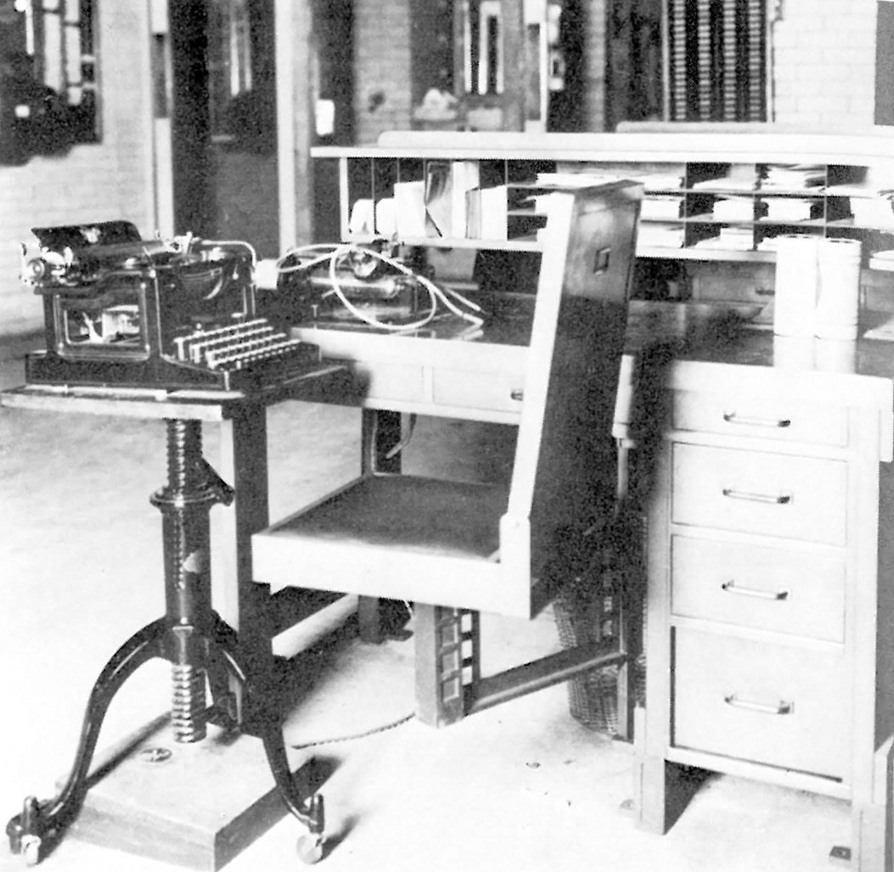
1) Before “serviced”: the traditional office model (and why it was painful)
For much of the 20th century, the default office model was straightforward: businesses leased space long-term, then separately arranged furniture, phones, utilities, maintenance, cleaning, and support staff. This worked well for stable, established companies but it was slow, capital-intensive, and inflexible for growing businesses, project teams, or companies entering new markets.
At the same time, the shape of the office kept evolving from dense clerical “rows of desks” to open-plan experiments, to cubicles, and then into hybrid layouts. Those shifts were partly about productivity and culture, but they also signalled something else: work was becoming more modular, and organisations increasingly wanted space that could change as quickly as their teams did
2) The 1960s: “executive suites” and the birth of serviced offices
Most histories of the sector trace the earliest “serviced office / executive suite” concept to the early 1960s. A commonly cited milestone is OmniOffices (1962), often referenced as one of the first businesses to offer furnished offices on flexible terms.
Soon after, specialised providers refined the model. For example, Fegen Law Suites (1966) is frequently referenced as offering furnished offices with support services tailored to professionals—an early hint of what later became standard in serviced offices (mail handling, call answering, meeting space access, and shared facilities).
What changed here wasn’t just décor. It was the commercial idea:
- Shorter commitments
- Furnished, ready-to-work space
- Shared front-of-house and business support
- A single monthly fee (or bundled approach)
That bundle space + services + flexibility became the DNA of serviced offices.
3) The 1970s–1990s: business centres scale up (and tech makes it easier)
As business travel increased and companies became more international, the “business centre” concept expanded. A key thread in many timelines is consolidation and scaling through the late 20th century, including the roll-up of early pioneers and the rise of global operators.
A major name that helped popularise flexible workspace globally is Regus (now part of International Workplace Group, IWG), founded in 1989 with the aim of providing flexible office space to customers, one of the best-documented corporate origin points in the category.
Meanwhile, technology was quietly removing friction:
- Personal computers and portable devices
- Email and the web
- VoIP and call routing
- Videoconferencing and collaboration tools
As these became normal, “place” mattered a bit less—opening the door to virtual office services (prestigious address + mail + phones + meeting space access without being there daily).
4) The 2000s–2010s: “flexible workspace” goes mainstream (and coworking reshapes expectations)
By the 2000s, serviced offices weren’t just a niche convenience for travelling executives, they were a mainstream option for:
- start-ups avoiding long leases
- corporates setting up satellite teams
- project groups and consultants
- companies testing new markets
The language also broadened. In the UK, the industry increasingly grouped serviced offices, managed offices, and coworking under the umbrella of flexible workspace.
At the same time, coworking added new expectations: community, design-led space, shared amenities, and “work as a lifestyle.” Serviced offices responded by levelling up fit-out quality, hospitality-style reception, meeting experiences, and overall flexibility.
5) 2020s: hybrid work accelerates demand for flexibility
The post-2020 world pushed workplace strategy into a new era. Many businesses now balance:
- home working
- HQ time for collaboration
- local touchdown space closer to where people live
Property and workplace commentary in recent years points to flexible office solutions as a way to reduce risk and match space to demand, especially when team size and attendance vary week to week.
In other words: serviced offices didn’t just survive the shift—they became one of the most practical tools for it.
What actually defines a serviced office today?
While exact packages vary by operator, the accepted core idea is consistent: a workspace offered on flexible terms with the essentials included so you can start work immediately.
That typically means:
- ready-to-use space (furnished, connected)
- a managed building experience (front desk, maintenance, cleaning)
- simple monthly billing and shorter commitments
- optional add-ons (meeting rooms, mail, phones, etc.)
Why Link Spaces in Slough is a great option
If the history of serviced offices is about reducing friction—making it easier to start, scale, and operate, then location and operational support matter as much as the workspace itself.
A strategic Slough location
Link Spaces is based in Slough at a premium venue near Heathrow, with easy access to Windsor and Maidenhead, and positioned just off the M4 & M25—a practical base for teams and clients moving across the Thames Valley and into London.
Workspace Types & Core Services
- Serviced Offices – Private, fully furnished offices ready to move into, with flexible terms and professional business infrastructure.
- Coworking Space – Flexible membership options (hot desks and dedicated desks) in open, collaborative areas with high-speed connectivity and amenities.
- Meeting & Conference Rooms – Modern, well-equipped rooms available to book by the hour or day, with presentation tech, video conferencing, and support services.
- Virtual Offices – Prestigious Slough business address with options for mail services such as forwarding, scanning, and registered-address use.
- Day Passes – Short-term access to coworking lounges and facilities without commitment.
Amenities & Member Perks
- High-speed wired and wireless internet throughout the venue.
- Reception and on-site support team to assist with bookings and day-to-day needs.
- Breakout and communal areas for collaboration and relaxation.
- Parking, secure bike storage and showers for active commuters.
- Refreshments (including coffee and kitchen facilities) and comfortable lounge spaces.
- 24/7 access for members and flexible booking options based on your business needs.
- Complimentary shuttle bus to key nearby connections (Slough station / wider area).
Source List
Herman Miller – Action Office system (introduced in 1968):
https://www.hermanmiller.com/en_lac/products/workspaces/workstations/action-office-system/design-story/
Flexible Space Association (FlexSA) – Serviced offices definition (UK trade body):
https://www.flexsa.co.uk/serviced-offices
Savills (PDF) – UK Flex Office Perspectives 2021 (terminology + market context):
https://pdf.euro.savills.co.uk/uk/office-reports/uk-flex-office-perspectives-2021.pdf
IWG (Regus) – “About us” / founding in 1989:
https://www.iwgplc.com/en-gb/about-us
Wikipedia – Executive suite (history mentions OmniOffices 1962; Fegen 1966; Servcorp 1978):
https://en.wikipedia.org/wiki/Executive_suite
Wikipedia – Virtual office (timeline includes early serviced office milestones):
https://en.wikipedia.org/wiki/Virtual_office
FreeOfficeFinder – Evolution of the serviced office (1960s onwards):
https://www.freeofficefinder.com/article/evolution-of-the-serviced-office
Gryphon Property Partners – Serviced office timeline (industry milestones & consolidation):
https://www.gryphonpropertypartners.com/article/serviced-office-timeline/457.html
Devono – Flexible & serviced office space (plain-English overview):
https://devono.com/flexible-and-serviced-office-spaces/
Savills blog – why businesses choose flexible office space (risk/cost flexibility):
https://www.savills.co.uk/blog/article/372520/us-articles/why-savvy-businesses-are-choosing-flexible-office-spaces.aspx
Pingback: doxycycline mono
Pingback: tetracycline for acne price
Pingback: allopurinol 100 mg tablet generic
Pingback: prevacid 30 mg capsule